Lucky Numbers, Local Rules, and Games You've Never Heard Of: Why Southeast Asian Casino Culture Hits Different

Photo: Ken Lund from Las Vegas, Nevada, USA, CC BY-SA 2.0, via Wikimedia Commons
You've done Vegas. Maybe Atlantic City. You've got your game, your system, your comfort zone. And somewhere around the thousandth spin of a slot machine that looks identical to every other slot machine you've ever played, a thought creeps in: Is this it?
For a growing number of American players, the answer to that question has been a one-way ticket — literal or digital — into Southeast Asian casino culture. And once you understand why, it's hard to go back.
This isn't just about different games (though the games are genuinely different). It's about an entirely distinct relationship between people and gambling that's been shaped by centuries of culture, superstition, social ritual, and yes, some seriously creative game design.
The Luck Philosophy Is Baked In Differently
In Western casino culture, luck is something you hope for. In much of Southeast Asia, luck is something you prepare for, invite, and read.
Numerology plays a significant role across the region. In Vietnamese, Cantonese-influenced Chinese-Malaysian, and Thai gaming communities, certain numbers carry weight that goes well beyond personal preference. The number 8 is broadly considered fortunate across much of the region due to its phonetic similarity to words meaning prosperity. The number 4 is widely avoided. This isn't casual superstition — it actively shapes betting patterns, bet sizing, and even game selection.
For American players who've always approached casino games as pure probability exercises, encountering a table where half the players are making decisions based on a completely different informational framework is genuinely fascinating. It doesn't change the math, but it changes the culture of the table in ways that feel electric.
Vietnam's Card Game Scene: Tien Len and Why It Matters
If you spend any time in Vietnamese gaming communities — online or in person — you'll encounter Tien Len (also called Thirteen or Pusoy Dos in Filipino variants). It's a shedding-style card game where the goal is to get rid of all your cards before opponents do, using specific combinations and a hierarchy of plays that takes real time to master.
What makes Tien Len interesting from an American perspective is how it bridges social card gaming and gambling. It's played casually at family gatherings and competitively at real-money tables. The skill ceiling is genuinely high, and experienced players have a meaningful edge over novices — which is a different proposition than most casino games where the house edge is fixed regardless of your choices.
Several Southeast Asian online platforms now offer Tien Len in multiplayer formats with real-money stakes. For American players who love poker but want something with a different feel, it's worth the learning curve.
Indonesia's Tournament Culture: It's a Community Sport
In Indonesia, gambling's complicated legal status has pushed gaming communities toward a particular kind of creative adaptation. Online platforms serving Indonesian players have developed robust tournament ecosystems that transform what would otherwise be individual games into shared competitive events.
Slot tournaments with live leaderboards, live dealer competitions where the top performers across a session split a prize pool, and multi-round sports betting contests have all become standard features. The effect is that playing feels less like a solitary activity and more like participating in something communal — even when you're sitting alone at your laptop at midnight.
American players raised on fantasy sports leagues and poker tournaments tend to click with this format almost immediately. The competitive overlay scratches the same itch, but the game variety underneath is completely fresh.
The Malaysian Mahjong Influence: Tiles at the Table
Mahjong's influence on Malaysian casino culture is hard to overstate. While the tile game itself predates modern casino gaming, its strategic DNA has filtered into how Malaysian players approach betting games broadly — patience, pattern recognition, and a comfort with longer sessions over rapid-fire play.
Online platforms serving Malaysian audiences often feature Mahjong-adjacent games alongside standard casino fare, and the pacing of live dealer tables in this market tends to be more deliberate than what you'd find on a Western-facing platform. For American players who find Vegas's relentless speed exhausting, this slower rhythm can actually be a relief.
More practically, understanding Mahjong tile values and combinations gives American players a genuine cultural bridge into conversation and community when engaging with Malaysian gaming platforms. It signals that you're not just passing through.
Ritual Behaviors at the Table: What Looks Strange Isn't
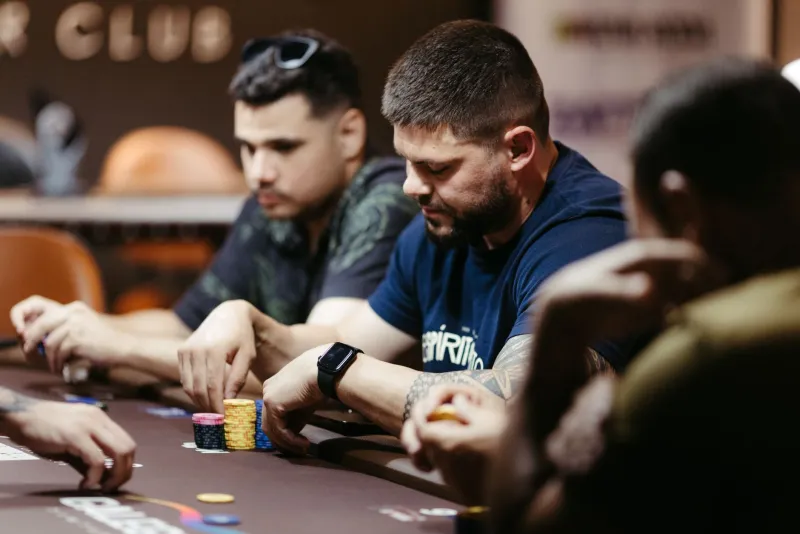
Walk into a casino in Macau, Manila, or Genting Highlands and you'll observe behaviors that look unusual if you're coming from a Western frame of reference. Players blowing on cards before revealing them. Specific ways of handling chips before a bet. Particular seating preferences based on positioning relative to the door or windows.
These aren't random quirks. They're expressions of a broader cultural belief that luck is an active, manageable force — and that how you behave in relation to a game affects outcomes in ways that go beyond pure probability. Whether you share that belief or not, understanding it changes how you interact with other players and how you read table dynamics.
American players who approach these practices with genuine curiosity rather than dismissiveness consistently report more positive experiences at Southeast Asian tables — both online and in person. There's a social intelligence component to this kind of gaming that's genuinely rewarding to develop.
Why American Players Keep Coming Back
There's a concept in game design called novelty value — the engagement boost that comes from encountering mechanics, rules, or environments you haven't fully mapped yet. Western casino games, for most experienced American players, have largely exhausted their novelty. The math is known. The experience is familiar.
Southeast Asian casino culture resets that clock. Not because the underlying probability is different — it isn't — but because the context around the games is rich enough to keep generating new experiences. New games to learn, new cultural logic to understand, new communities to engage with.
For players at MenangKasino88 who've been looking for a reason to actually care about the next session, that freshness is worth more than any bonus offer. Southeast Asia's gaming culture isn't just an alternative to Western casino norms — it's an expansion pack for how you think about the whole experience.